Optical Illusion Background: Elevating Visual Impact in Professional and Creative Projects
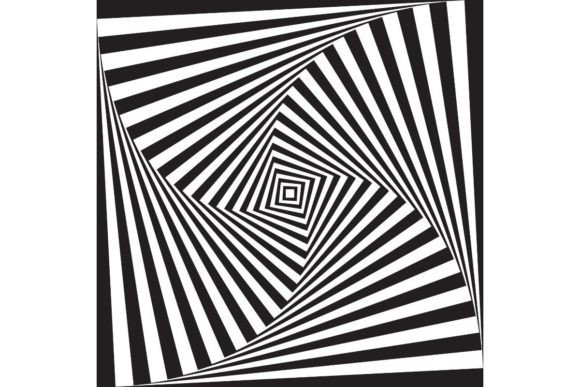
In the crowded landscape of digital and print media, capturing attention within seconds is no longer just an advantage; it is a necessity. Whether you are designing a business card that needs to stand out on a table or a website header that must stop a user from scrolling past, the visual element you choose sets the tone for your entire message. This is where Optical Illusion Background becomes a transformative tool. It is not merely a decorative pattern but a sophisticated abstract black-and-white design that leverages human perception to create depth, movement, and intrigue.
Many designers and content creators struggle with the challenge of balancing aesthetic appeal with professional clarity. A busy background can distract from the core message, while a plain one often gets ignored. The goal is to find a middle ground—a design that engages the eye without overwhelming the information. An Optical Illusion Background offers a unique solution to this dilemma. By utilizing high-contrast monochrome elements, it draws the viewer in through subtle geometric movements, creating a sense of dynamism that static images simply cannot achieve.
Understanding the Power of Abstract Monochrome Design
At its core, an Optical Illusion Background is an abstract composition designed to trick the brain into perceiving motion or three-dimensional depth on a flat surface. These designs typically rely on the interplay between black and white to create optical effects that feel alive. For professionals seeking practical answers to their design challenges, understanding this mechanism is key. Unlike colorful patterns that might clash with branding colors, a black-and-white abstract design serves as a neutral yet powerful canvas.
The primary need here is versatility. Users often require assets that can adapt to various contexts without losing their impact. Because the design relies on contrast rather than hue, it integrates seamlessly with almost any color palette used for text or logos. This makes it an ideal choice for users who need a consistent visual identity across multiple platforms. When you implement an Optical Illusion Background, you are choosing a foundation that supports your content rather than competing with it.
Solving Common Design Challenges
Designers frequently face specific hurdles when trying to create engaging materials. One common issue is "visual fatigue," where the audience stops paying attention because the layout feels too uniform. Another challenge is ensuring that files are scalable without losing quality, especially when moving from small mobile screens to large-format posters. Traditional raster images often pixelate when enlarged, leading to a loss of professionalism.
This is where the specific file structure of an Optical Illusion Background proves invaluable. The inclusion of a vector EPS file ensures that the design remains crisp at any size. You can scale a business card up to a billboard without ever worrying about jagged edges or blurry lines. Furthermore, the accompanying 300 dpi JPG file provides a ready-to-use image format for projects where vector editing software is not required. This dual-file approach addresses the immediate need for flexibility and the long-term need for quality assurance.
Practical Applications Across Industries
The utility of an Optical Illusion Background extends far beyond simple decoration. Its ability to add texture and depth makes it suitable for a wide array of applications. Let's explore how different professionals can leverage this asset to solve specific problems.
- Business Cards and Corporate Identity: In networking scenarios, a standard card is easily forgotten. Using an Optical Illusion Background creates a tactile and visual memory trigger. The abstract nature suggests innovation and forward-thinking, which is perfect for tech startups, architects, and creative agencies looking to make a lasting first impression.
- Invitations and Event Marketing: For galas, weddings, or corporate events, the invitation is the first hint of what to expect. A black-and-white illusion design adds a layer of elegance and mystery. It signals that the event will be sophisticated and thoughtfully curated, setting the right expectation before the guest even arrives.
- Crafts and Scrapbooking: Hobbyists often struggle to find backgrounds that look handmade but maintain a modern aesthetic. The high contrast of the Optical Illusion Background works beautifully in scrapbooking layouts, providing a structured backdrop that allows photos and journaling to pop without clashing with the page theme.
- Posters and Flyers: Advertising materials need to communicate quickly. The inherent "movement" in an optical illusion captures peripheral vision effectively. When used for flyers promoting art exhibitions, music festivals, or product launches, the background does the heavy lifting of grabbing attention, allowing the headline to deliver the specific call to action.
- Websites and Digital Advertising: In the digital realm, loading speed and visual hierarchy are critical. A well-optimized JPG version of the Optical Illusion Background can serve as a hero image or section divider. It breaks up long blocks of text and guides the user's eye down the page, improving readability and engagement rates.
Strategic Implementation for Different Users
Different users approach design with varying levels of technical expertise and specific goals. Understanding these nuances helps in maximizing the value of the asset.
For the Graphic Designer: Your focus is on precision and scalability. You should start by opening the vector EPS file in Adobe Illustrator or similar software. Here, you have the freedom to adjust the opacity, blend modes, or even recolor the elements if your brand guidelines require a slight variation. Use the vector file for all print-ready documents to ensure the highest resolution output.
For the Small Business Owner: Your priority is ease of use and cost-effectiveness. You may not have time to edit complex vectors. In this case, download the 300 dpi JPG file. You can upload this directly to online design tools like Canva or social media managers. The high resolution ensures that your posts and printed flyers look professional without needing advanced editing skills.
For the DIY Crafter: Your goal is creativity and personalization. Cut out sections of the Optical Illusion Background to use as textured paper for journals or gift tags. The abstract nature allows you to mix it with other textures, such as fabric or wood, creating a unique juxtaposition that adds character to your handmade projects.
Maximizing Outcomes and Considerations
To get the most out of an Optical Illusion Background, it is important to consider the balance between the background and the foreground. Since the design is visually active, it pairs best with clean, sans-serif typography. Avoid using ornate fonts that compete with the geometric complexity of the background. Instead, let the background provide the energy while the text provides the clarity.
Another consideration is accessibility. While the black-and-white contrast is generally excellent for readability, ensure that any text overlaid on the illusion has sufficient contrast against the darkest and lightest parts of the pattern. Testing your design in grayscale can help verify that the information remains legible regardless of how the background is perceived.
The ultimate outcome of using this resource is a cohesive visual strategy. By integrating an Optical Illusion Background into your workflow, you are not just adding a graphic; you are enhancing the perceived value of your communication. Whether you are aiming to build brand recognition, sell a product, or express artistic vision, the abstract depth provided by this design offers a professional edge that resonates with adult audiences seeking substance and style.
In conclusion, the Optical Illusion Background is more than a stock image; it is a strategic asset. With its combination of a scalable vector EPS file and a high-resolution JPG, it meets the rigorous demands of modern design while offering the flexibility needed for diverse projects. By applying this tool thoughtfully, you can transform ordinary materials into extraordinary experiences that capture attention and drive results.